The Governor’s Thinking Has Become Very Uptight

Originally posted on Rethinking the University.

Mulling over Jerry Brown’s recent comments on the disruptive impact of digital technology on education, I’m reminded of the lead character in the Coen Brothers film The Big Lebowski. Another spokesman for the California Dream, The Dude lumbers through a mystifying course of events that seem to be related, but are not. At one point he thinks he’s figured it all out and quips, “My thinking had become very uptight.”

Yes, Governor Brown’s thinking has become very uptight, myopic, and apparently funneled through the tiny screen of his iPhone. When he thinks about the digital revolution in education, he sees only online courses. When he reads an old out of print book on his iPhone, he sees Only Google Books and not the library that contributed the book. When he Googles “university education online” he just reads the hits, and doesn’t see the educational infrastructure that trained the computer scientists who wrote algorithms and designed his iPhone.

Fact is, the University of California is plenty familiar with the creative destruction of digital technology, even if UC Online, the darling of our administrators, is apparently a failure. Setting aside the huge impact of digital technology on research and scholarly communication (digitization of sources, data mining, online publishing, etc.), and looking only at undergraduate teaching, our practice is thoroughly hybrid. Our courses use digitized readings, online discussion forums, e-mail, and other interactive, distance education tools.

What more do Coursera and Udacity offer? Without diminishing the potential of these platforms, it seems their courses are mainly recorded lectures. Even the best lecture video is just a rehash of a technology that’s been around for a while. There are distinctions. Technical courses (computer science, for instance) seem to be well suited to the digital platform. History courses, on the other hand, are mostly lectures. As cool as it is to watch a pre-eminent scholar in my field, recorded lectures delivered online are not too different from audio books, which is to say, marketable but not revolutionary.

What the massive online open courses (MOOCs) have going for them is reach, and the illusion of cost-free communication. The governor, it seems, has caught MOOC Fever. The fever-dream of one course enrolling tens of thousands of students is hard to shake, even in the face of the huge drop-out rates that always dog these courses. It may be that you can have a single course with 10,000 students. But they cannot be students in a meaningful way without expensive educational infrastructure.

The truly disruptive potential of digital technology in education waits beyond the paradigm of the “course.” Courses are administrative units, rather than educational measures. Digital platforms, while they clearly can deliver courses, are most effective when communicating granular elements of education—sources, problems, and skill-based activities. For instance, what if we reimagined “prerequisites” and even some elements of “general education” as sets of skills rather than courses? Digital media could deliver and evaluate students’ mastery of these skill sets, leaving professors to work with students on writing, communication, and complex research problems.

A system like this could operate as a supplement to face-to-face courses. It would allow students to catch up quickly when they fall behind, to change majors without fear of adding another year to the course of study. Professors teaching face-to-face classes who find a student is unprepared for course work could direct the student to these online platforms to strengthen his or her basic skills.

Imagine if this system were created and administered by a consortium of faculty, in collaboration with high school teachers and counselors—perhaps completely outside of the traditional administrative structures of higher education.

Of course, all of this is speculative, even dreamy. And it presupposes a commitment to public higher education on the part of the state and federal governments. The point is that we can imagine a future of education that uses digital technologies to serve educational purposes, rather than one in which education is crammed into ready made online boxes. But to do this we have to think more about knowledge and human development and less about administration and market-making.

Posted in Politics, Technology, Teaching | Tagged , , , | Leave a comment

Jerry Brown, Vanguard of the Digital Revolution (He Googled It)

Originally posted on Remaking the University.

At the last Regents meeting, Governor Brown mounted the digital barricades and sent a shot across the bow of every University of California professor and administrator. Tossing a mixed green salad of metaphors about technology, education, capitalism, and revolution, he warned us to embrace online education or go the way of the Post Office and the daily newspaper. Fossilized. Downsized. Out of business. Also, we need to “fix this” in the next two years, and don’t expect any money from Prop. 30.

Helpfully, he’s planning to recruit business and technology advocates of online education to make an hour-long presentation to the next Regents meeting (and maybe faculty will be able to reply). Thanks Governor!

Listening to this eight-minute clip from the Regents meeting, I was struck by the reality that UC faculty should not count on our administrators to defend our interests, or those of students.

Brown steamrolled Yudof’s meek appeal that we’ve already cut too much, and launched into an off-the cuff rant with a fairly clear message: change or die. He portrayed the UC as a lumbering giant mired in tradition, choking on its own “excellence,” and sorely in need of radical transformation. All of these I can agree with. Unfortunately, Brown thinks Silicon Valley will be our savior.

Brown began with backhanded praise for the UC’s institutional conservatism, and quickly moved on to harsh business realities.

I appreciate the university and the durability of its ways. I won’t call them ‘folkways,’ but it’s a powerful tradition and I, and half of me very much likes tradition…. [But] just while people were talking I went to my iPhone and I went to Google and I typed in ‘university education online’ and there’s a lot there and we don’t have to wait until January, or February, or March. We can have it right now. So that’s the world we live in…. The newspaper, the Post Office, the university. We can build the most fabulous buildings, we can have the teachers, professors, all this kind of stuff. But if other people come along and offer the same, or better, when they want it, you’re going to find there’s pressure out there.

Warmed up, he suggested the educational emperor is not wearing any clothes…

We invoke the terms ‘quality’ and ‘excellence’, but those are highly abstract terms that provide no particular guidance to what we’re talking about here. So I think we have to get grounded here. So: What takes place in a classroom? Are there other, equally fine alternatives that are so much more available? I believe that to be the case.

…then he rose to a crescendo with the triple threat: Schumpeter, McCarthyism, and Angela Davis:

… What we’re talking about here is disruption. Make no mistake about it. That’s what everyone loves to celebrate about capitalism, the creative destruction of the capitalist model. Okay, so we’re going to have to have some disruption here. So I would propose that we invite some of the individuals who are pushing this technology. Not that we have to agree with them, but the university is a place where you can accept ideas whether you like them or not. This is not the time when the Regents used to censure someone for being a little bit too ‘red.’ This won’t be as threatening, or maybe it will be more threatening, than having Angela Davis teach on the campus.

That’s a lot to chew on, and a lot to spit out. In any case, our problem is not mixed metaphors; it’s the coherent message. And the message is this: get your butts in gear, put your courses online, and don’t expect a raise. If not, kiss your sweet sinecure goodbye.

Is Jerry Brown a bolshevist for the digital revolution? Or is he trying out for the part of west coast Rahm Emmanuel? We’ll find out at the next Regents meeting, January 15-17 at UCSF.

Posted in Politics, Teaching, Technology | Tagged , , | Leave a comment

Janitors in the Archive

DSC_0020Last week we welcomed about 25 off-duty janitors and their children to the UCLA Special Collections Department to look at the Justice for Janitors archive.

Union members got to look at newsletters, organizing flyers, photographs and letters of support from janitors around the country–all laid out in the hushed and rarefied atmosphere of the Special Collections Dept. It was a fitting, if low-key, culmination of more than a year of collaboration between the United Service Workers West, the Institute for Research on Labor and Employment, History Department, and the UCLA Library. All the UCLA partners are committed to making the union’s records accessible to members and the community.

As participants in the Parent University of the Building Skills Partnership, the janitors were on campus to learn about the public higher education admissions process, and to generate enthusiasm for college with their children. Surveys of union members by UCLA researchers revealed that over 70% expected their children to attend college. The Parent University program was developed to help members with children in the Los Angeles Unified School District become more effective advocates for the children, and navigate the complexities of college admissions.

The collection is now open to the public for research at the Special Collections Department of the Charles E. Young Research Library on the UCLA campus. The first place to start is with the very detailed finding aid, available online. It provides a folder-by-folder description of the collection and is fully searchable. If you want to see the collection in person, you need to put in a request at least a day in advance. In the meantime, you can view more than 100 items from the collection online. If you find something interesting, let us know!

Cross-posted from the L.A. Social Justice History Project.

Posted in History, Labor | Leave a comment

Workers promoted to “supervising robots”

Riding the MachineI ran across this piece on a new manufacturing robot branded as Baxter.  With it’s tablet screen face, the robot comes off as “benign, perhaps even disarmingly friendly,” according to the New York Times article, which doesn’t stray too far from the promotional content on Rethink Robotics‘ website.

The article and the promotional site are eager to place Baxter in the midst of human workers and the global political economy of labor.  Baxter is a “robot with common sense” that responds to human scale interactions.  He slows down when humans get in his space, and can work “elbow to elbow” with human workers. However, rather than displacing human workers, the promotional video tells us, Baxter will make life better for them by taking over the most menial tasks. Human workers will “train” (rather than program) Baxter how to perform these tasks and “get a promotion from working on repetitive mundane tasks to supervising robots that do them.”  And Baxter’s low operating costs means he earns less than Chinese workers, reversing the off-shoring logic of globalization (a fact proudly matched by the robot’s “Made in the USA” label).

It’s striking how much this replays debates from the 1920s and 1930s when critics of mass production said the assembly line turned workers into robots and boosters of mechanization focused on power tools (from chain saws, to trucks, to dishwashers) as helpers that humans could (and did) easily control. Rodney Brooks, the mind behind Baxter, clearly falls in the latter camp.  But whether machines are good or bad has never been the interesting or important question.  The real question is: too whom will the benefits of mechanization accrue?

There is no shying away from the idea that Baxter is a worker, rather than (or in addition to) a machine/computer.  He/it is going to replace human workers somewhere.  The appeal to owners/managers is easy to see: a  low cost robot that doesn’t get Social Security, health insurance, etc, and a way to avoid out-sourcing that is becoming less economical with the rise of transport costs.  The appeal to American workers is doubly, or triply, weird in that they supposedly get the satisfaction of stealing work back from Chinese workers, the relief of keeping their own jobs, and the feeling superiority toward their robot underlings. As usual, the workers–robotic and human–are not getting the best deal.

Posted in Culture, History, Technology | Tagged , | Leave a comment

Archiving is not a spectator sport

Janitors rally in downtown Los Angeles, 1990Today we are celebrating the donation of the Justice for Janitors Papers to the UCLA Library.  The papers document the history of a remarkable union local, mostly recent immigrants, who took on some of the biggest corporations in the city–and won.  (You can find out more about the collection and today’s events here.)

Los Angeles has been a hotbed of innovative labor and social justice organizing over the past few decades, but the record of this recent history was almost entirely journalistic and sociological.  Of course, that’s not unusual with “recent history.”  But having lived and researched extensively in two older cities, it was remarkable to me that  there didn’t appear to be a major library collecting the records of the organizations and people linked to one of the key social movement networks of the late 20th century.  There is just no equivalent in L.A., for instance, to Detroit’s Reuther Library.

The Justice for Janitors collection comes to UCLA through a collaboration between SEIU United Service Workers West (i.e., the union), the Institute for Research on Labor & Employment, and the UCLA Library.  In the main, it documents the period from 1985 to the early 2000s, but also includes documents and photographs dating to the 1940s.  So in addition to providing a detailed record of the union’s organizing campaign, the collection also documents the changing demographics of the L.A. building service workforce, and the efforts of California unionists to organize immigrant workers in the 1980s.

Two years ago my Labor Center colleague Gaspar Rivera Salgado suggested that the janitors union might want to donate its papers.  “What if,” he asked, “we could gather up the papers of the janitors and all the other key unions in L.A.?  What if UCLA was *the* place to study recent social movement and immigration history?” Music to my ears.

IMG_0310IMG_0306The challenge, of course, is that the Justice for Janitors campaign and other unions don’t have a lot of extra time to reflect on the past. They have a great regard for their history of struggle, but putting their old records in order is not a high priority.

So how do you archive a moving target?  The answer is: with a lot of help.

We could not have come even to this point without the work of my graduate students Caroline Luce (see the before and after photos of her handiwork) and Andrew Gomez (who has been collecting oral histories). USWW’s political director Juan Carlos Cristales was a champion from the beginning.  Virginia Espino at the UCLA Oral History Research Center helped to train our students, and made some vital connections with the media.  In the UCLA Library, Tom Hyry, Marta Brunner, Megan Frazier and others helped move the process forward.  We also benefited from the support of University Librarian Gary Strong.  Chris Tilly of the Institute for Research on Labor & Employment and Kent Wong from the UCLA Labor Center cheered us on and helped out at crucial junctures.  And many, many students helped in ways small and large.  Our thanks go out to students in History 146, History 156, History 191d, Labor Studies 188, and Chicano/a Studies Field Research Methods.  And to the members of United Service Workers West, Local 1877 and Local 399, we thank you for entrusting UCLA with your history.

Posted in Culture, History, Labor | Tagged , , | Leave a comment

Spring Comes to L.A.

The winter quarter is winding down at UCLA, the libraries are full, and the professors scrambling to get ready for spring.  Yes, including me.  I’ll be teaching a digital history class titled “History, Now! Digital Media, Social Crisis, Historical Perspectives.”  Here’s the description:

A defining feature of our time is a pervasive sense of crisis. Cable news and social media that facilitate what seem to be instant and unmediated images and messages about unfolding events heighten our sense that we are living at an unusually important juncture in time. This reality invites two opposite reactions. On the one hand we see our time as new and unprecedented. On the other hand we search for analogies to moments of great change in the past.

In “History, Now!” students will explore the present moment in historical perspective. A key component of the class is to use social media to communicate, explore, and analyze our subjects. How do these media enhance or undermine our sense of history? How can we bring more history into the hyper-now space of the web?

Of course, there are a million topics one might include in such a course, but I aim to focus things on immigration, political insurgency and economic crisis.  The upcoming May Day actions will be one focus, and we’ll look to capture history-as-it-happens digitally, and place May Day in a longer perspective.

And with this I’ll be reviving Bughouse Square because I’ll be asking all my students to create blogs, post to Twitter, and write a “paper” online.   Should be a lot of fun.

Posted in Teaching | Tagged , , , , | 4 Comments

UCLA Rally

UCLA students occupy the center of Wilshre intersection

UCLA students occupy Wilshire and Westwood

About 300 students, faculty and staff gathered on the UCLA campus Wednesday, November 9th for a rally and march sponsored by the anti-austerity groups ReFund California and Make Banks Pay. The noontime rally on Bruin Plaza featured speakers the academic student employees union (UAW), UPTE, and undergraduate students. The message was consistent: budget cuts and tuition increases are becoming intolerable. The crowd was predominantly undergraduate students, along with a handful of faculty and folks from AFT, AFSCME, and the skilled trades. The rally was more informal than similar events in the past, suggesting to me that students (rather than the unions) were the driving force.

Members of the Los Angeles janitors union (SEIU) were on hand in solidarity, and later to provide security for the march. Speaking in Spanish, with translation by union staff, they connected their own workplace struggles to the defunding of higher education. As low wage immigrant workers, their American Dream is not simply to get higher wages, but also to send their children to college. That was an inspiring message for the university crowd, reminding us that higher education is relevant to people well beyond the campus community.

Following the rally, demonstrators marched south along Westwood Blvd, taking up the entire southbound lane, on their way a Bank of America branch. While the crowd chanted “Banks got bailed out, we got sold out” organizers draped ATMs with caution tape and posted the ReFund California Pledge to the front door. The march then continued to the busy intersection of Westwood and Wilshire where it blocked six lanes of traffic. There were some tense moments as drivers, frantic to get wherever they were going, weaved through the crowd and some of the braver demonstrators stepped in to block their way.

As the police arrived in large numbers, about a dozen protesters, apparently all students, sat down in the middle of the intersection beginning a long standoff. Those who did not want to risk arrest stood on the sidewalks, dividing the crowd across the four corners of the vast intersection, but setting up spirited call-and-response chanting that echoed off the walls of the corporate office towers surrounding us. In the center, the dozen expecting to be arrested sat in a circle facing outward, chatting with police and the National Lawyers Guild and taking interviews from the news media. After a long, long wait, 15 or 20 unmarked police cars pulled up and disgorged the tactical team that would eventually perform the arrests. Apparently, this is standard procedure with LAPD: overwhelming numbers to prevent any trouble. Completely professional, but it seemed like overkill. The crowd was militantly peaceful, and the only danger of violence came from the bankers and brokers angry that their commute would be delayed by a display of democratic citizenship. After the arrests, the remaining 50 or so students marched together back to campus, stopping briefly to protest once more at the Bank of America.

All in all, it had the feeling of a dress rehearsal for something bigger.

[note to regular readers, I wrote this back in November, had it posted to a different blog, but never posted here.  So I'm publishing, but under the original date--November 2011]

Posted in Labor, Students | Tagged , , , | Leave a comment

The Demand for Demands Misses the Point

People's Collective University at Occupy Los Angeles

Now that the Occupy Wall Street phenomenon has achieved a level of respect from the mainstream media (by which I mean it’s no longer an object of knee-jerk ridicule), all the smart people are demanding that it shape up, identify some leaders and publish a list of demands.  Without these, we’re to understand, the movement will drift into insignificance or, worse, mob violence.

As an institutionalized intellectual, I too am favorable to manifestos, lists of demands and organizational structure.  But at this point, the demand for demands and leaders misses something important about the political dynamic at hand, and about social movement dynamics generally.

1. The Public Sphere was Dead.  There really isn’t a “left” movement in the U.S., nor is there a “progressive” movement.  There are many organizations and information outlets, but no movement.  Obama’s success in 2008 relied on a youthful upsurge in participation, but this was largely mobilized within his campaign apparatus. When he turned off the money at the close of the election cycle the phantom “movement” disappeared.  But this reality was only a symptom of something worse: a huge deficit of organizational capacity in the population at large.  Very few people understand even the basics of how to organize.  It’s not taught in schools, of course.  The collapse of union density means that millions of people who might otherwise know something about how a collective action works, never get the opportunity.  Only on the political right, and within right-leaning religious groups, are people systematically introduced to the mechanics of organizing.  Why this happened is a big question with many answers:  corporate media, test-driven schooling, dying labor movement, broken links between generations of activists, economic despair. But the deficit is real.

2. Process not Project.  The sad reality of the moribund public sphere is the starting point for this maybe-movement, and that’s why expecting it to act like the Debsian Socialist Party is wrongheaded.  The strong social movements of the 20th century took decades to build, and they began in scattered conversations, debates, and disagreements–dare I say consensus building.  There are leaders in the occupations, there are organizers.  So the critique is more about leadership style.  And the grievances of the Occupy movement are pretty obvious, if diffuse, to anyone who is really listening:  things are bad, the government isn’t doing anything about it, and we’re finally fed up.  Granted that isn’t particularly sophisticated on a political level and, more importantly, generalized grievances are hard to build action around in the long run.  But it’s hard to argue with success.  Do we really think having clearer demands would have done a better job sparking the political imagination?  For all the gripes about the Occupiers being too mushy, the demand for demands has its own mysticism.  It imagines that great manifestos actually make movements.  So let’s be patient, and be part of this movement in the making.

3.  Healthy social movements are multiple.  The occupation of Zuccotti Park in Manhattan sparked this phase of our political life, but it’s worth reminding ourselves that it is just one node in a wider conflict.  The genius of Occupy Wall Street was to set an example of resistance, and offer a model of community-in-action.  This model is spreading.  But it can’t be the same in every location.  When we ask, “Will the occupations become a movement?” we seem to be expecting, literally, the occupation of Zuccotti Park to morph into some post-modern political party (readers can substitute their favored party: Communist, Socialist, Progressive, etc.).  This, I think, misses the point.  We don’t need a unified movement and in any case total unity is impossible to achieve when we get down to the level of factional politics.  So criticism, suggestion, strategic intervention and parallel action are all completely reasonable and healthy.  More is more.

By way of example, one of the best recent actions in Los Angeles was organized not by Occupy L.A., but by the post-ACORN community organization ACCE.  They spent a week focusing on the impending foreclosure of one family home in South L.A.  The took their people to the bank that holds the mortgage, they protested on the front lawn of the CEO of that bank, and they lobbied Fannie Mae.  In the end, they won.  Rose Gudiel, who missed on payment, and was facing foreclosure and eviction, won a mortgage modification and can keep her home (see Peter Drier’s account here).  This was a well-executed series of actions, but here in L.A. as in other places well-executed actions don’t always get traction.  It helped immensely to have the occupations in the news, changing the overall flow of public discourse.

And so the Occupation Non-Movement may well remain a non-movement and still be  successful.  Zuccotti Park may be cleared out by the police and the occupation will still be successful.  It has sparked a million conversations that otherwise would have been muted.  And it’s the conversations, rather than the manifestos, that make movements move.  That’s not to say it doesn’t matter what direction the occupations go, only to say particular modes of development are not required to make the occupations worthwhile.

Posted in Culture, History, Labor, Politics | Tagged , , , | Leave a comment

Traction, Torque, Leverage: #OWS Mission Accomplished

Political and economic systems have a lot of inertia.  Once they are up and running, once people come to see them as “normal” they move along with apparent stability, even when in retrospect we see that they were in crisis.  Or, as has been the case with the past few years, the crisis seems evident but the system carries on without fundamental change, seemingly undaunted by protest, criticism, and resistance.

Until something gains traction.

Eight months ago I asked whether the protests in Wisconsin to oppose the radical restructuring of the state’s political economy were becoming “the movement we’ve been waiting for”? I concluded, “When the demand to protect public-sector collective bargaining becomes a demand to restore public services generally, we’ll be on the way.”  Now, clearly, we’re on our way.  Where to?  We don’t know yet, but we are rolling.

Tomorrow morning the NYPD will be rolling too.  Rolling in to Zuccotti Park/Liberty Square to remove the Occupy Wall Street encampment.  Just a cleaning say city officials, but afterwards there will be no more camping out.  As the Guardian reports it, the park’s private owners “appear to have had enough of their uninvited guests and have ordered a cleanup to begin at 7am on Friday.”  The occupiers have offered to clean the park themselves, and are ready for a showdown, perhaps any time after midnight.

Given the militarization of the NYPD, if Mayor Bloomberg wants the protesters out they’ll be out.  Afterwards, there will likely be days or even weeks of civil disobedience aiming to reoccupy the park, and the police will probably win that battle too.

But the occupation of a particular plot of ground in New York City was not really the goal.  The goal was to goad the scattered and demoralized into action.  And as of today there are nearly 1,500 cities reporting some kind of event or action inspired by Occupy Wall Street, , according to Occupy Together.  Mission accomplished.

Madison = Torque

Yet for all the drama of Occupy Wall Street, it has been much smaller and less sustained than the massive, and massively disruptive, occupation of the Wisconsin capitol building back in February.  As Tom Morello described the feeling of being inside the rotunda and on the streets of Madison: “there was so much torque, and it really seemed like it could be something that was about much more than stopping one bad law.”  So much torque, so much potential to turn the screw.  But, he goes on, the energy was dissipated into recall elections rather than a general strike.

Could that have happened?  Did labor leaders choke?  For labor historians, it’s a familiar question.  But the impact of the Madison protests was not lost on the leadership of the labor movement nationally.  After a large delegation of Los Angeles unionists traveled to freezing cold Madison last winter the returned with a renewed sense of possibility.  The vast protests, the occupation of the state capital, the solidarity between public and private sector unions, between firefighters, police, and everyone else, between union and nonunion, young and old.  All of this was inspiring.  So too was the surprising racial landscape of the protests.  California unionists had grown used to seeing angry white people as their political and social enemies.  The crowds and leadership in Madison were diverse, but they were paler by far than the typical neighborhood in Los Angeles County.  To paraphrase one L.A. union official:  if all those white people are on our side, we just might start winning again.

But it was a long summer as the Wisconsin and Ohio protests funneled their energy into state-level politics, the federal government careened toward default, and President Obama seemed incapable or unwilling to fight back.  For the left, even for the unions (who are by no means all “left”), the mainstream of American politics has been hermetically sealed, a smooth ball with zero traction.  No way to crack it open.  No leverage.  In the summer lull, the respected labor strategiest Stephen Lerner issued an appeal for labor to work more flexibly with non-labor groups: “Campaigns challenging corporate power can’t be held in check by institutions with too much to lose,” i.e., unions.  And then along came Occupy Wall Street.

Less control.  More agitation.  More torque, more leverage.  At least for now that appears to be the way forward.

Posted in History, Labor, Politics | Tagged , , | Leave a comment

Wisconsin: Is this the movement we’ve been waiting for?

Although you frequently hear comparisons between the Great Depression of the 1930s and our own Great Recession–and between FDR and Obama–there is at least one important distinction.

During the early years of the Great Depression, working people in the U.S. organized an array of direct action responses and mounted a number of militant strikes.  Anti-eviction actions in the cities, penny auctions to save family farms, Unemployed Councils, the Farm Holiday movement, EPIC, general strikes in Toledo, Minneapolis, and San Francisco…the list goes on.  Most of it before the most important reforms of the New Deal.  These kinds of protests created political pressure, and political opportunity, that resulted in the more progressive “Second New Deal” that brought us the Wagner Act, the WPA, Fair Labor Standards, and Fair Employment Practices.

Three years into the deepest economic collapse since the 1930s, the U.S. has seen almost no popular response.  Sure, we’ve seen orchestrated “populist” outrage with the Tea Partiers.  But no popular social movement. Until now.

The news at first trickled in across Facebook and email–a friend at the Teaching Assistants Association posted that they received a fax announcing the revocation of their contract effective in 30 days.  By the end of this week it was national and international news–40,000 strong protest at the state capital, senators fleeing to Illinois, similar protests brewing in Ohio.

Most progressive critiques of Barack Obama have rung hollow in my ears because there really isn’t a progressive social movement in this country creating the kinds of political pressures and opportunities for broader change.  Practically speaking, there isn’t all that much “civil society” here either.  Some progressive bloggers out there seem to think they represent a “movement” that elected Obama.  I don’t see it that way.  No doubt Obama tapped into progressive sentiment to power his campaign.  But what we saw in 2008 was a highly effective political campaign, not (yet) a movement.  When he demobilized the campaign its potential to morph into something bigger dissipated.

What we’re seeing in Wisconsin might be the start of that social movement we’ve been waiting for.  I think we’ll know this is happening when the spirit of these protests turn  from Republican inspired state-level union-busting to the Neo-Hooverite budgets being proposed by Republicans and Democrats in Washington and by Democratic governors like Jerry Brown.  When the demand to protect public-sector collective bargaining becomes a demand to restore public services generally, we’ll be on the way.

Wisconsin is a big first step, and an inspiration.  We’ve grown used to defeat.  It looks like the crowds of protesters are getting a taste for collective action and, dare I say it, power.  Forward!

Posted in History, Labor, Politics | Tagged , | 2 Comments

Sex, Captions, and Digital History

An image from "Frontier to Heartland"

Exhibit-making does not rate as highly as article- and book-writing in orthodox academic history.  That’s an unfortunate fact of life.  But as I wrapped up a long overdue online exhibit project this past summer, I was reminded of the things I find compelling about exhibit-making, whether online or in physical spaces.

First off, eyeballs. The typical exhibit gets more visitors than the journal article or book gets readers.  Fewer than 1,000 people have read Indispensable Outcasts (it being the 1.4 millionth bestselling book on Amazon), which I spent many a year crafting.  About 10,000 people visited Outspoken during its 4 month physical installation.  Concept to close, maybe 3 years.

But at the moment I’m more interested in the exhibit-making work process as a model of historical research and meaning-making for the curator.  And here my tale suggests important differences between physical and digital exhibits. Consider the image at right: a flyer from a Chicago’s Dill Pickle Club preserved at the Newberry Library.  Continue reading

Posted in Document, History | Tagged , , , , , , , , , | Leave a comment

Robots! Images from my SSHA Paper

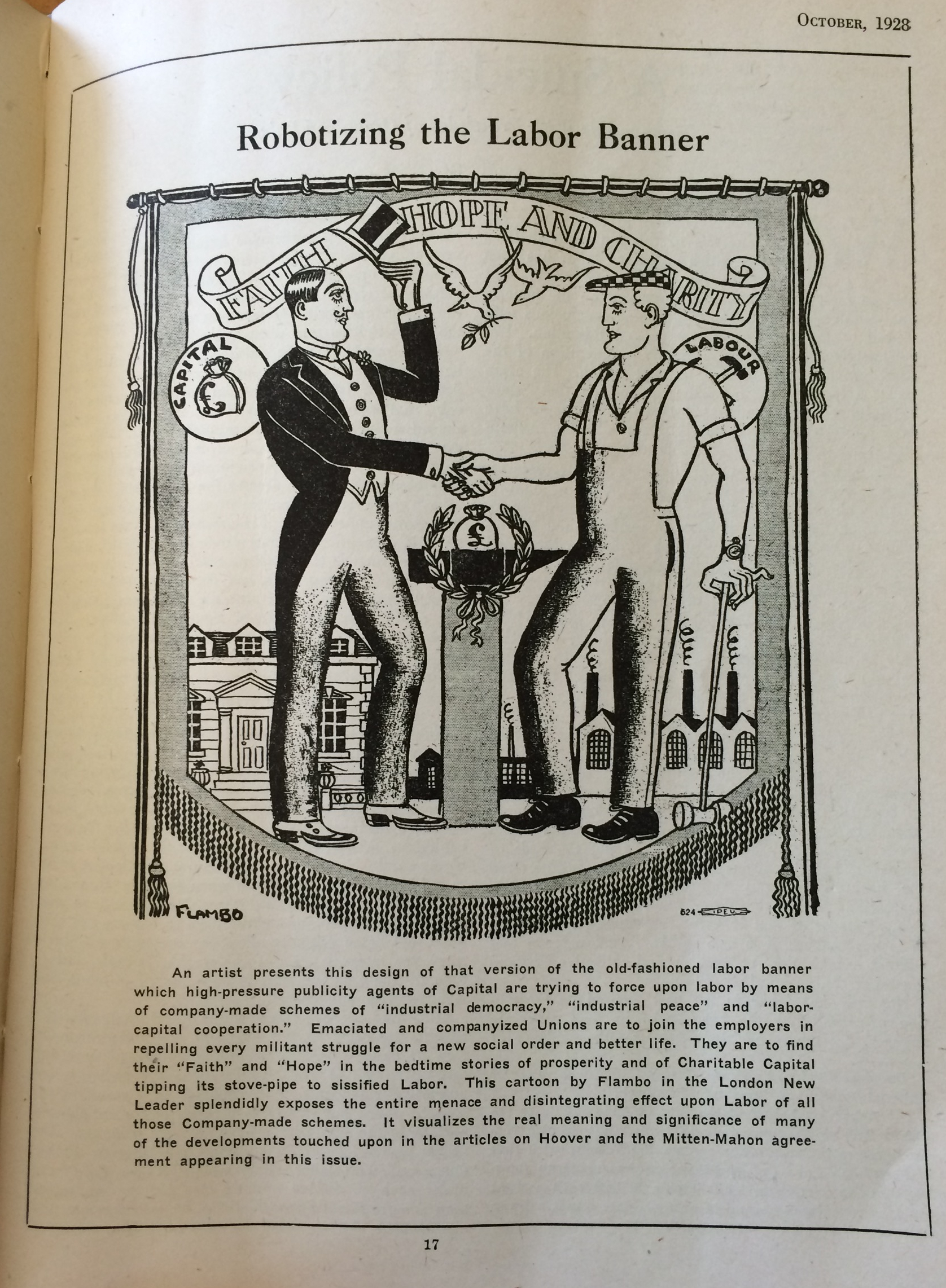
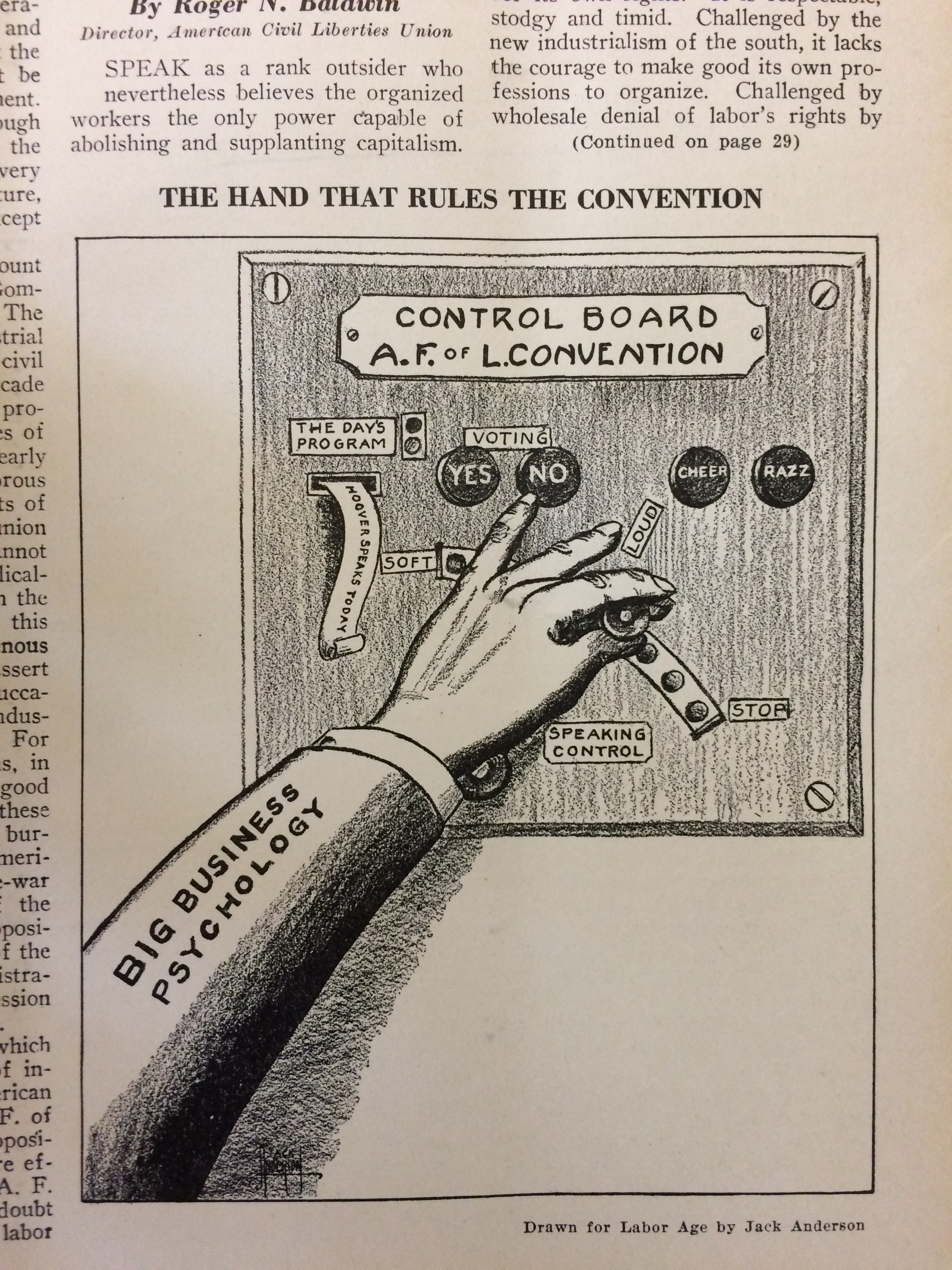
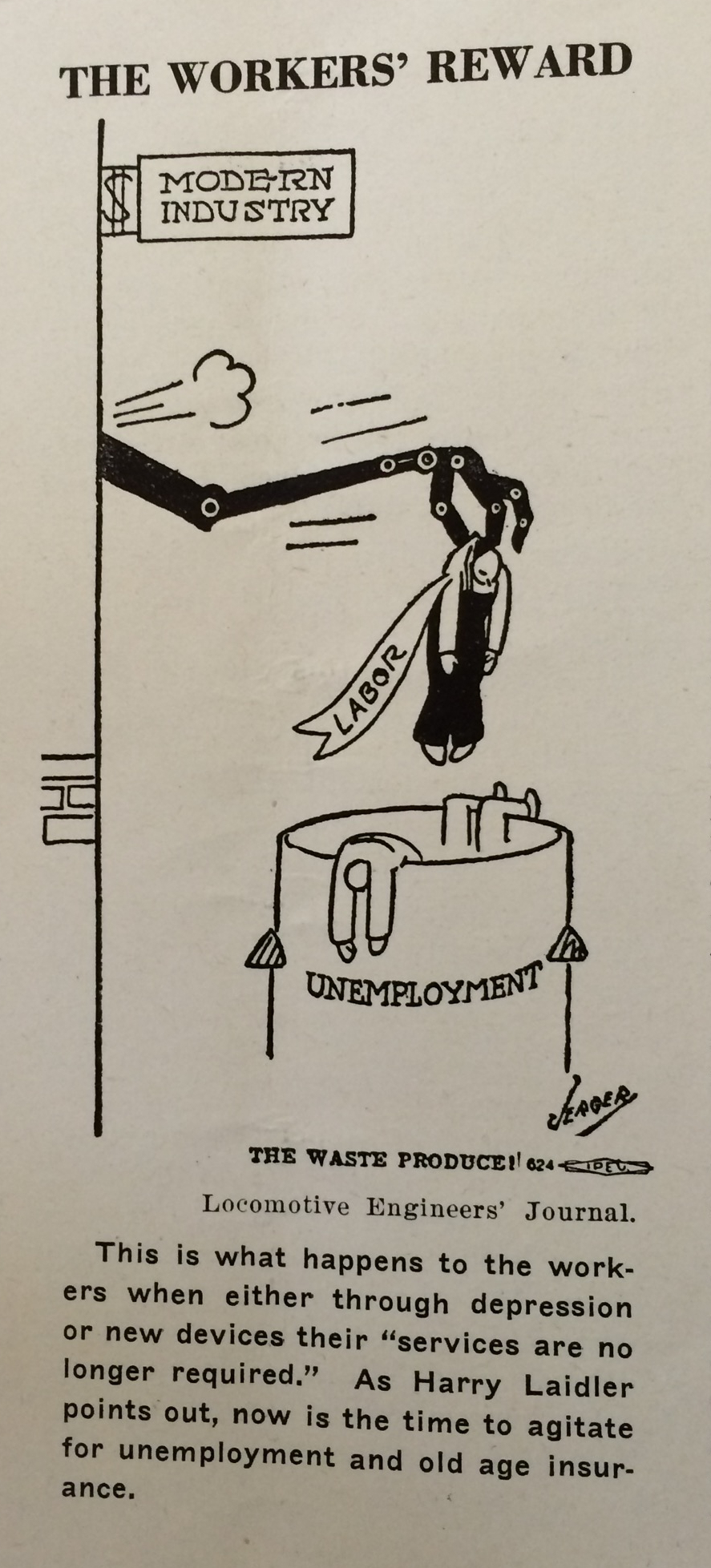
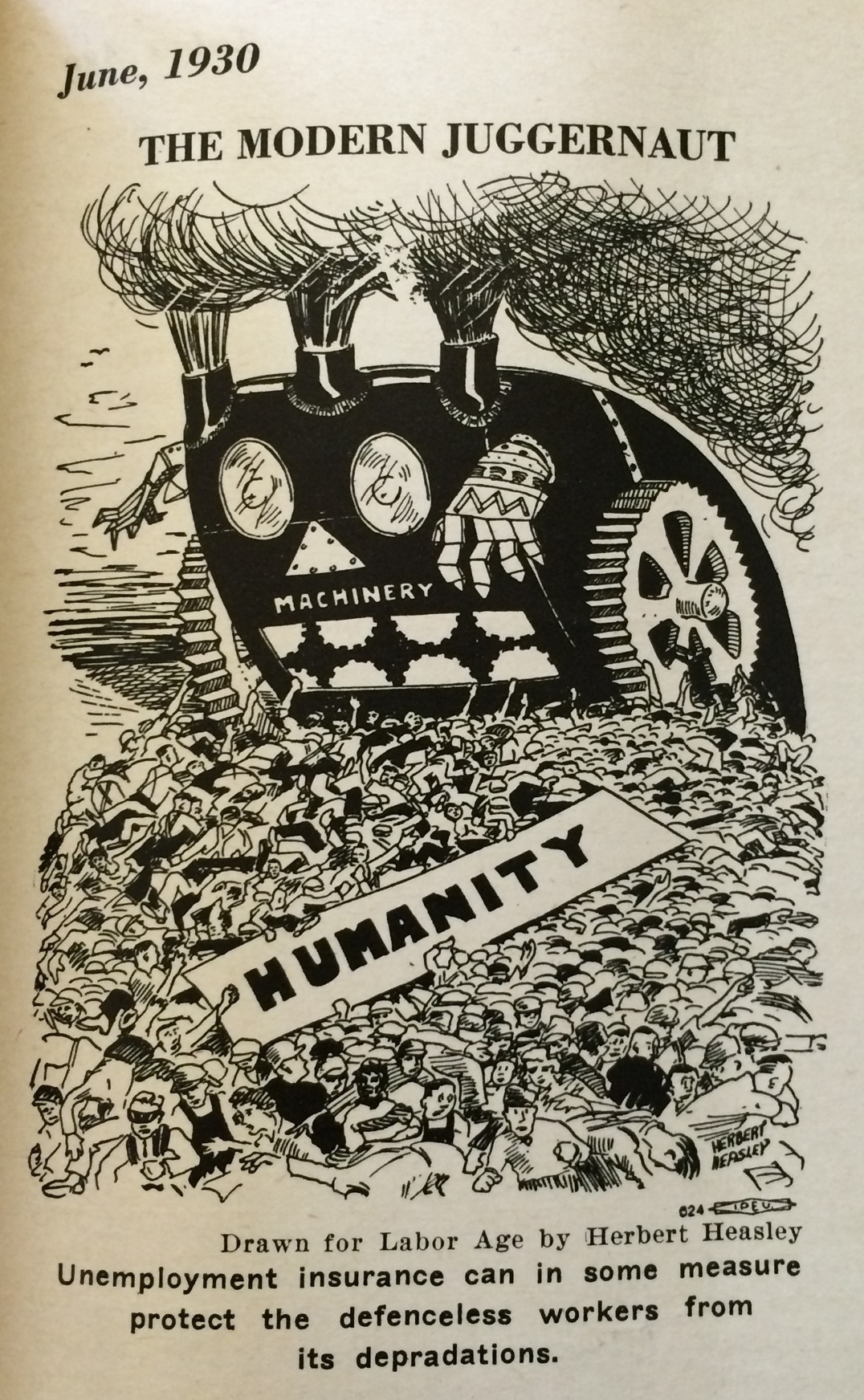
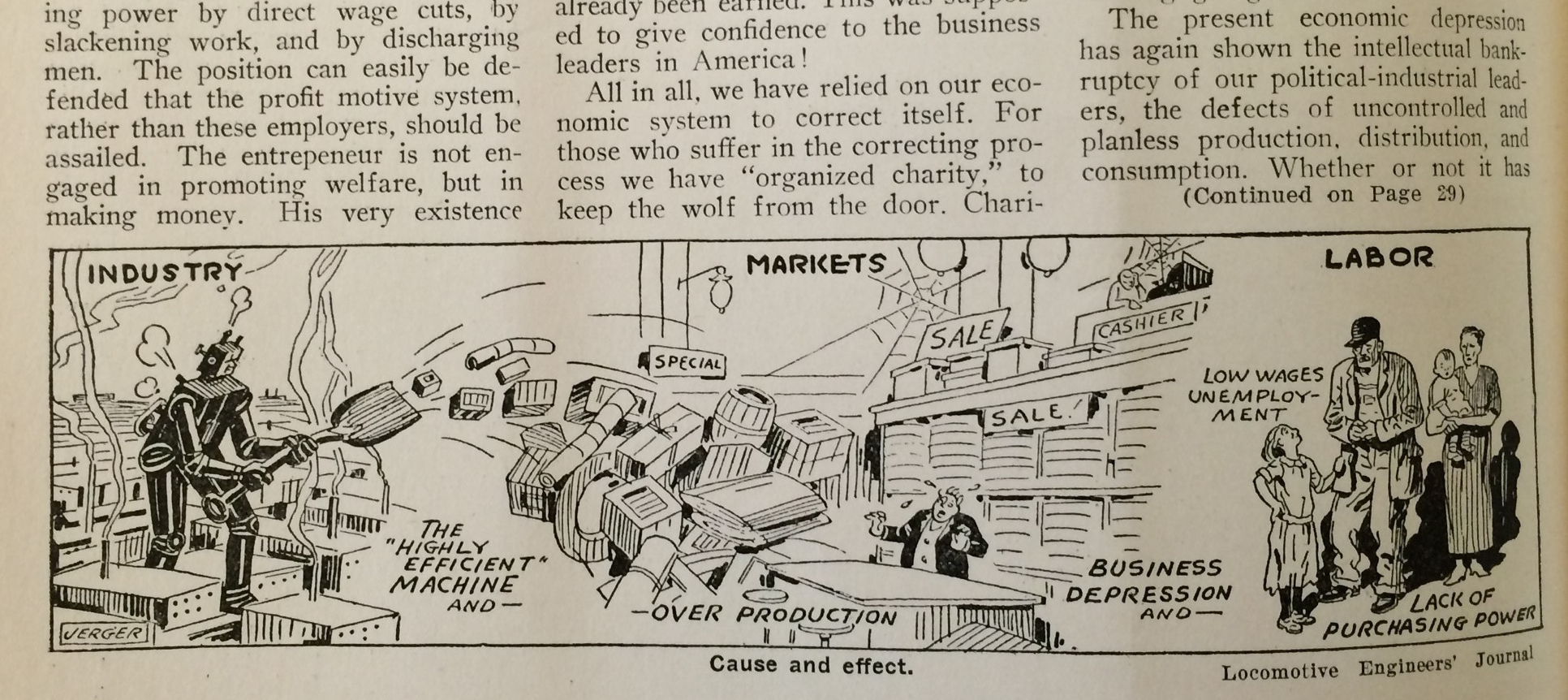
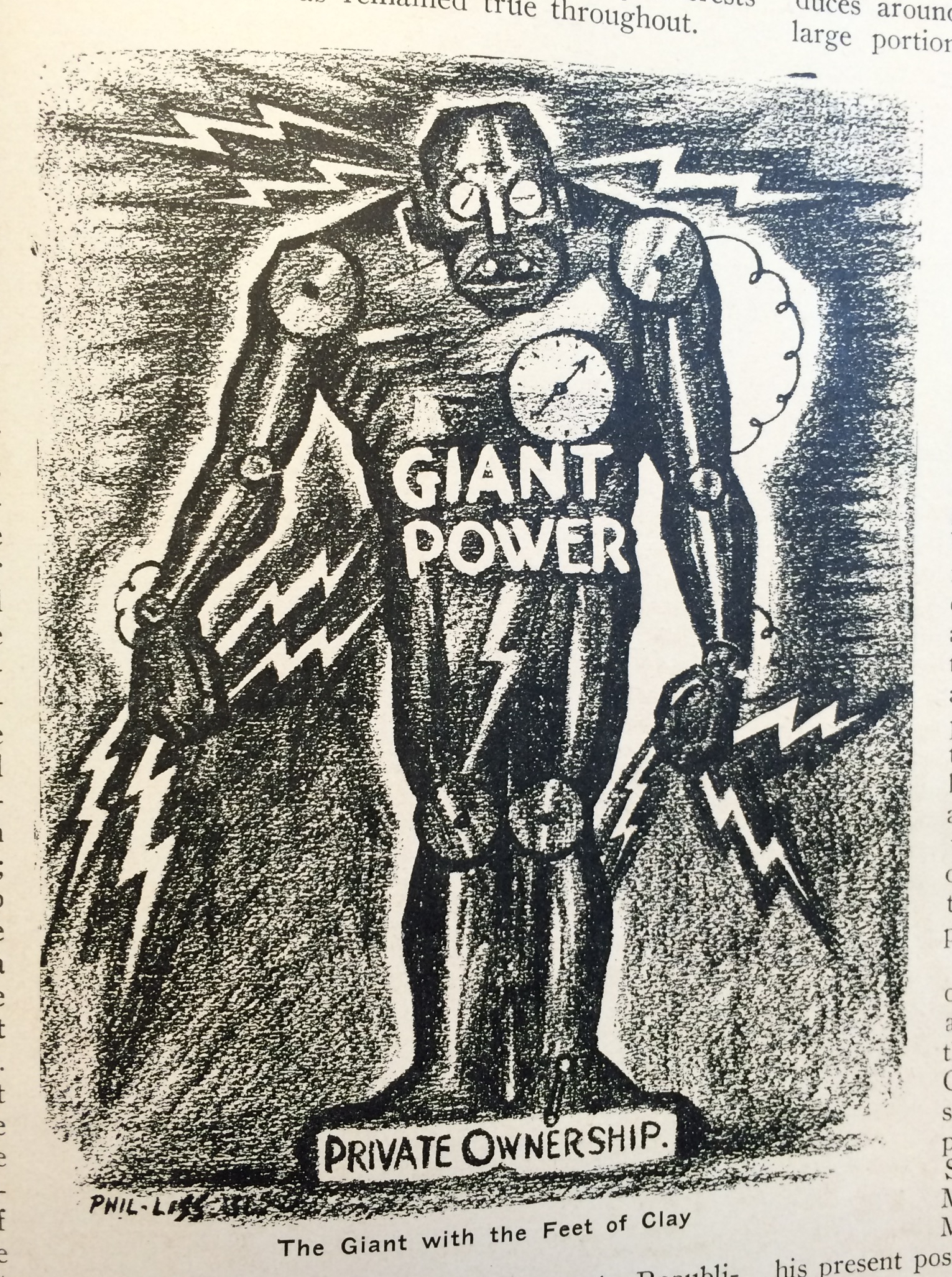
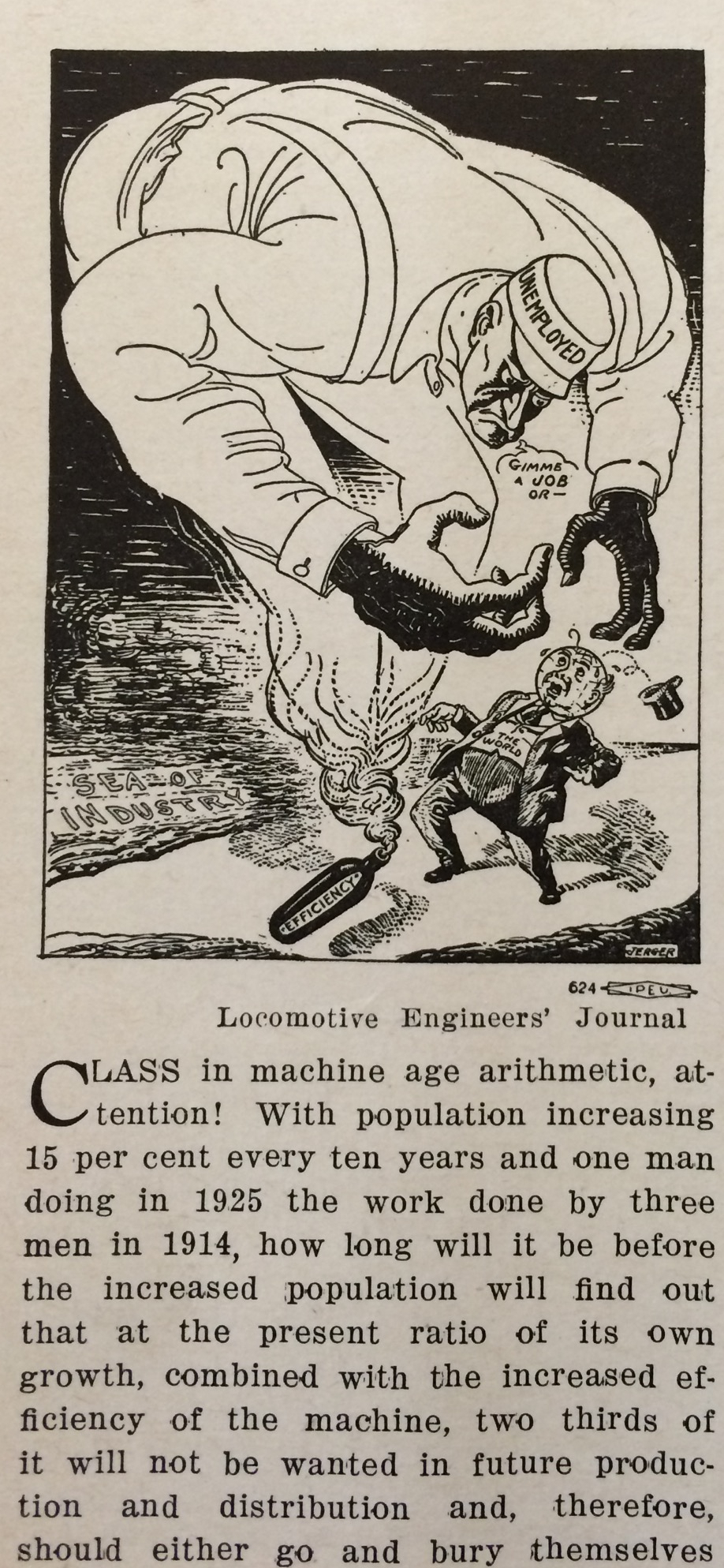
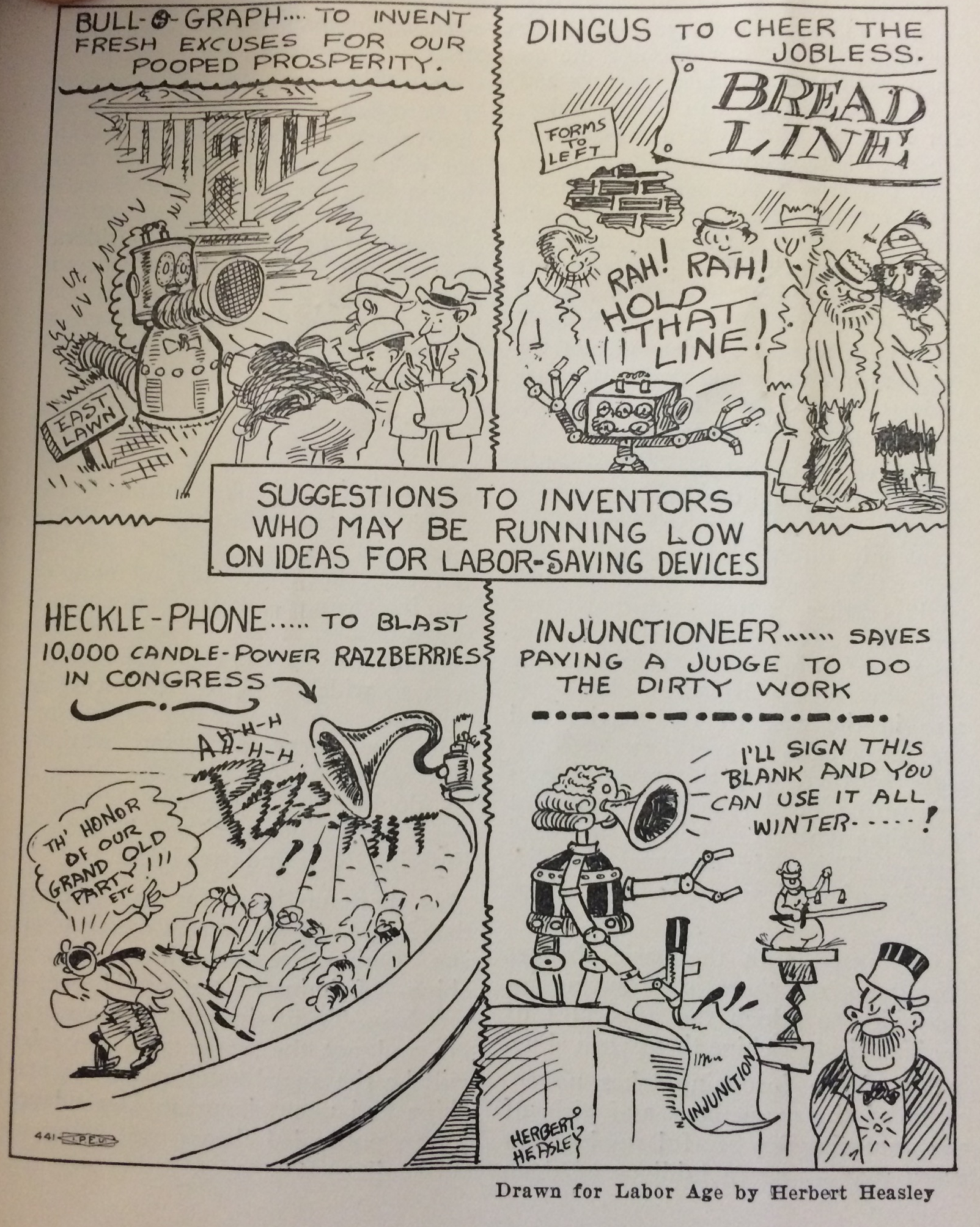
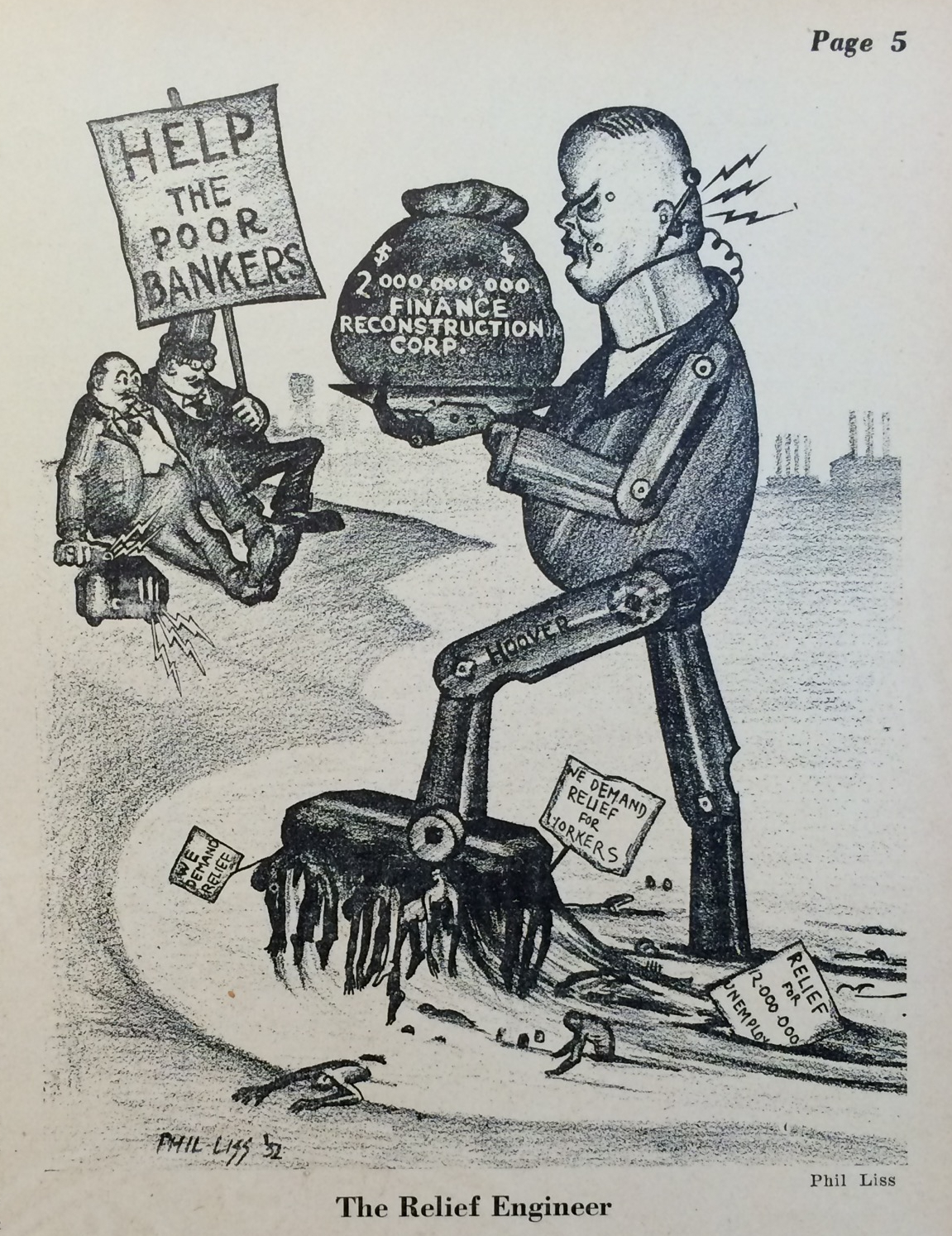
Great to be back in Chicago for the Social Science History Association conference.  I was scheduled to give a paper on the “Iconography of the Workers Education Movement.”  But, alas, time got away from me so I presented a modified version of an article on the play “R.U.R. (Rossum’s Universal Robots) and the shifting image of the Robot from the 1920s to the 1930s.  Got some good feedback from Liz Faue and others.  Continue reading

Posted in History | Tagged , , | Leave a comment